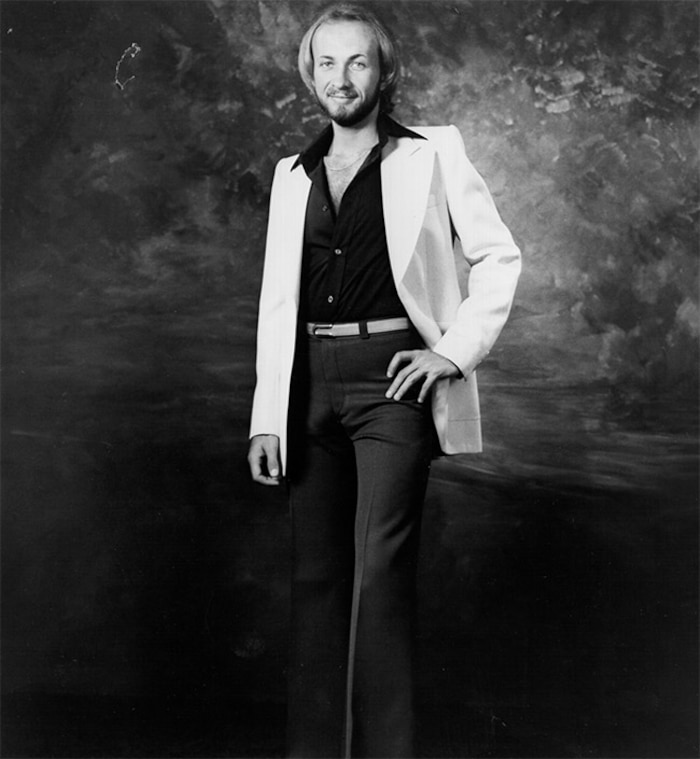
The Rise and Fall of Ray Caviano and RFC Records

The unbelievable story of a disco kingpin responsible for breaking hits by Gino Soccio, A Number of Names, and Rod Stewart.
Every great story needs a third act. Ray Caviano, the “disco kingpin” who wound up in jail on drug charges and then vanished from the scene for 25 years, is living proof. Back in the late ’70s disco heyday, Caviano was in his prime as the scene’s number-one record executive. From his glitter ball perch at Warner/RFC records, he launched hits for Rod Stewart, The Doobie Brothers, Gino Soccio, Change and Ashford and Simpson. But only a few years later, Caviano had a “$500-per-day drug habit” and was in New York State jail.

“I went a little bit into the abyss if you will,” says Caviano over the phone during a recent interview. “I struggled for a very long time coming to grips with that.” Now, Caviano – who turned his back on the music business and reinvented himself as an addictions specialist two decades ago – is back for his third act.

After a glamorous label launch at Studio 54 in 1979, Raymond Francis Caviano and RFC were in high gear: Gino Soccio’s debut single “Dancer,” which was the artist’s first major-label single, became a number-one disco smash. Caviano had been given a multi-million dollar canvas to paint his disco masterpiece (bequeathed to him from Warner’s big boss Mo Ostin) and he got to work fast.

Speaking over the phone from his home in Brooklyn and bursting with positive energy, one can see how Ostin was charmed enough to give Caviano his own label and millions to work with. “I was brought up in Manhattan, I loved music, I loved Motown. I’m a music man, and I’m a gay man, so I’m the ultimate disco consumer and promotion guy. I’m on the dance floor, I’m in the booth.”

Indeed, being “in the booth” was a big part of Caviano’s success. As a staffer at Henry Stone’s TK imprint, he worked the major discos in the New York area and helped launch hits for the Ritchie Family, T-Connection, Voyage, Foxy and KC and the Sunshine Band.

“The relationship I had with Larry Levan was a very personal one. I could go there, tell him the intro and get a record on in a hot minute.”Ray Caviano

Coming up with the rise of club culture, it was through working with Billy Smith, a promo man with 20th Century Records, that Caviano learned to refine the art of pitching records in the booth. “Almost six nights a week, he had a car and we would literally go to six or seven clubs in the city, and, yes, we would go out to Fire Island. I would introduce myself and get connected with the DJs on a very personal level,” says Caviano. The concept today seems foreign, but Caviano could stroll into the best clubs, armed with the latest test pressings, and instantly hear them played to a packed dance floor. “The relationship I had with Larry Levan was a very personal one,” says Caviano. “I could go there, tell him the intro and get a record on in a hot minute.”

Back at his RFC office, Caviano would field new demos. “DJs would come to my office: Larry, Danny Krivit, Roy Thode, Tim Burgess. I had a crew of people surrounding me when we listened to a new record. If we didn’t feel the energy of it, nine out of ten times, it wasn’t going to work in the clubs. People would come to my office, and we would play the records and we would say ‘naahhhh I don’t think so.’”

Along with Soccio’s first album, RFC hit early gold with Change’s monster debut LP The Glow of Love, which featured Luther Vandross. And while Caviano ran RFC as his personal fiefdom, he continued to strike gold pushing music on the Warner label, too: Rod Stewart’ “Do Ya Think I’m Sexy,” The Doobie Brothers’ “What A Fool Believes” and Prince’s “I Wanna Be Your Lover” are a few examples of big tunes that Caviano and his team pushed via the clubs. “I used to bring (famous WBLS radio DJ) Frankie Crocker to the Garage. Larry would play a test pressing, and it was on the radio the following morning. That was a very powerful position to be in.”

Vince Aletti, a journalist who had covered the early disco scene at the Loft and other New York clubs, was brought in to do A&R for Warner/RFC. “I had never made so much money,” Aletti says over the phone from his New York home. But along with money, working with Caviano was the best perk he could ask for. “We had very similar tastes. I didn’t need to explain things to him,” says Aletti.

And what were they looking for in music?

“Hits,” said Aletti. “We didn’t have any agenda, except things people would dance to.”

Joey Carvello, a DJ in Boston who was recruited to help promote for Warner-RFC along the East coast, summed up the era in one word: crazy. “We hit the ground running, because we had all of Warners and it was the last label to get into dance music,” he said. “It was a whirlwind, it was so fucking crazy. We got paid a lot of money to go hang out in clubs and hang out all night long,” he says.

“Ray was a genius because he hired all the DJs to do promotion … we would walk into the club, we were all award-winning DJs and big-name DJs in our respective markets, so people had respect for us right off the bat. And Ray gave us great records, and we had other tools: We had all the party favors. Whatever the DJ needed or wanted, we were there for them.”

“At Warners, a lot of people resented him… He didn’t play the company game as well as other people.”Vince Aletti

It was the disco lifestyle. But despite the goodwill among DJs and the industry’s disco people, Caviano may have rubbed the suits at Warner’s Los Angeles offices the wrong way. “They hated us. They thought we were all gay, everyone in disco was gay to them,” says Carvello. Indeed, while disco united everyone on the dance floor, in the boardrooms of corporate America, that mix was fraught with friction.

“At Warners, a lot of people resented him. He was too brash and they thought he didn’t deserve the huge amount of money he got,” says Aletti. “He didn’t play the company game as well as other people. He was used to making his own decisions. I don’t think the gay angle helped much, in the end.”

Caviano has a slightly different assessment of the situation. “I wasn’t an accountant working in a stuffy office somewhere. It didn’t hurt me to be a gay man in the business,” he says. “They knew that the trends were being set by the clubs. You don’t think Warner Brothers knew my background? I took one of the executives to Fire Island, he ran back and said ‘I was just on Fire Island with Ray, the DJs love him!’”

However, he does admit that after the racial and sexual undertones of the “Disco Sucks” campaign in 1979, the label’s corporate honchos got a little nervous. Aletti says that around this time, Caviano approached Warners to renegotiate his contract. He’d delivered hits both at RFC and had been Warner’s point man for disco. (Getting DJ and producer Jim Burgess to remix “What a Fool Believes,” for example, was a deft touch that gave the song a big push through the clubs.) But Aletti believes that when Caviano asked for more money, Warners likely decided to cut ties.

Caviano pressed on and created a new independent label, joining forces with Quality Records in Canada where he could tap into the disco heat coming out of Montreal. During this period, RFC broke out big tunes like the raw funk of Empire Projecting Penny’s “Freakman,” Karen Silver’s “Set Me Free,” Jimmy Ross’s “First True Love Affair,” and re-released the Detroit proto techno classic “Sharevari” from A Number of Names. He also did independent promotion and scored a hit with Yoko Ono’s “Walking on Thin Ice,” which came out shortly after the murder of John Lennon.

After a year or so of independence, Caviano took RFC to Atlantic’s dance music division. During his time at Atlantic, Caviano again walked a fine line between mainstream and underground. On the one side, Caviano launched Laura Branigan’s hit “Gloria” onto the charts for Atlantic while also releasing underground hits like Suzy Qs “Get on Up.” Meanwhile, Soccio delivered “Try It Out” while Change released the Miracles LP.

As Caviano remembers it, “Atlantic was good and I was there for a while.” It was a hectic lifestyle and Caviano says he got by with youthful zeal and energy. So when asked what place drugs may have had in his lifestyle at this stage – staying at the clubs all night long while maintaining his corporate a foot in the corporate world – Caviano offers a nuanced answer. “If you take a guy like me, who got a lot of recognition and came from a dysfunctional family and here I am as a high school dropout . . . I used all the validation and the success as a way of filling a void. But the money wasn’t enough, there was a lot more happening that I had to address. And I had to take that journey.”

After the Warner shakeup, Aletti had gone on to work as the disco and R&B buyer for Tower Records when the chain opened its first store in the United States. But he had hoped to continue working with RFC after the dust had settled. Aletti admits he was hurt not to be asked back. But the two men led different lifestyles. “I did smoke pot, and that was something me and Ray had in common,” says Aletti, who preferred the warm up vibe in the clubs when the DJs could play the weirder stuff. By 3 AM, Aletti was ready to go to bed, just as the other party people were stretching out for another long night.

“She said, ‘This guy is crazy!’ And I said, ‘This guy is the king!’ He was the prince of disco. No Ray Caviano, no disco.”Joey Carvello

A 1986 Village Voice article about Caviano’s downfall suggested the whole RFC office was on drugs. But Caviano calls that “hyperbole.” “Vince Aletti did not have a coke problem. Vince is one of the most straight-laced guys. If anything, people smoked pot. But there wasn’t lines of coke. To be honest with you, coke wasn’t my substance of choice. It was opiates, it was heroin. But at the end of the day, does it matter if I’m doing molly, heroin, coke, or special K? Alcohol is a drug. Some of the hardest people I treat (at his addictions clinic) are the alcoholics.”

In the early ’80s, Joey Carvello had moved on to promote for other labels, but he would hear stories about Caviano from his ex-wife, who still worked in the same office as Caviano. “She said, ‘This guy is crazy!’ And I said, ‘This guy is the king!’ He was the prince of disco. No Ray Caviano, no disco.” Aletti also lost touch, but he would occasionally see Caviano – incidents he called “unpleasant run-ins.” Aletti says that he knew Caviano “was going through a hard time. I just thought he did too much cocaine … he was very manic.”

As RFC ran its course, Caviano returned to his roots as a club pitchman for Sleeping Bag and MicMac. Disco was done, but his expertise and skillset still made him a valuable player through the rise of freestyle and house. “There are so many records, some of them I forgot I signed.”

But the news in 1986 that Caviano had been incarcerated after violating his probation left his friends and colleagues shaken. “I was certainly shocked he got in trouble with the law,” says Aletti. “We really didn’t know if he was dead of alive. It was such a weird mystery.” The Village Voice reported on the “fall of the disco kingpin” and said Caviano had robbed his friends to support a $500-per-day addiction.

It’s this period and the corresponding flood of emotions and memories that Caviano is confronting as he re-emerges today. He recently “came out” on Facebook and gets hundreds of messages and friend requests. “People wanted to know if I was hiding in the shadows all these years,” says Caviano, who was mistaken for dead after his twin brother Robert – a booking agent who handled the affairs of Grace Jones and others – died of AIDS in the early ’90s.

Still, Caviano – who hasn’t touched any drugs in 18 years – is open about discussing his rise, fall and re-emergence, no matter what the consequences. And he admits that he still has his share of critics. “I’m not in denial about the history. If that was the case, I would not have come out on Facebook, I would not have done this interview,” he says.

He’s also looking to relaunch some of his music business activities – but in a responsible manner. “Here’s an analogy for you. Just like I was the guy on the dance floor, and had the communication with the DJ, I’m now the guy who’s been there and done that, and helping the next suffering addict. I’ve been there and I can relate to them on that dance floor.”

By Jered Stuffco on December 3, 2014
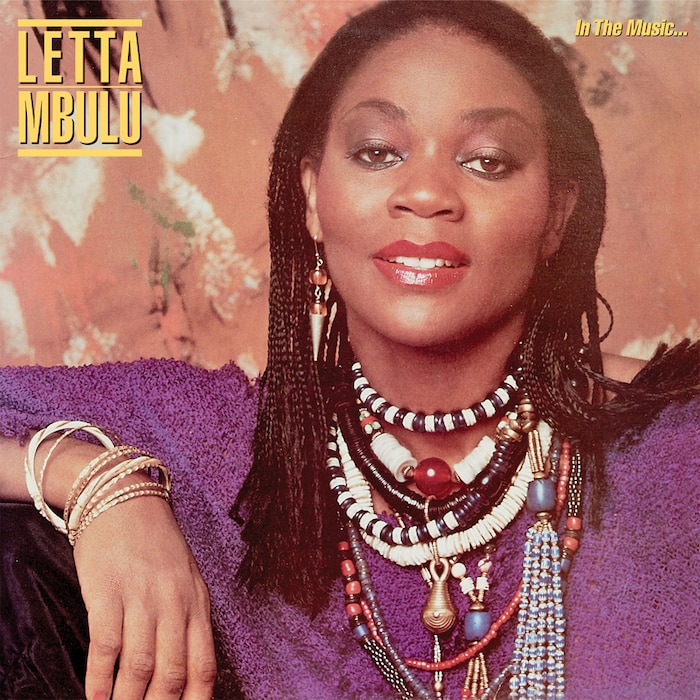
Letta Mbulu’s In the Music…

How apartheid, exile and America helped shape a classic LP

A period of exile can be a very fruitful – if painful – catalyst for many artists. In the case of South African singer Letta Mbulu, who fled the country due to apartheid in the mid-’60s, exile not only led to studio work with David Axlerod and Quincy Jones, but it helped spawn a musical conversation that spanned continents.

While Mbulu is perhaps best known for her vocals on Michael Jackson’s “Liberian Girl” and contributions to soundtracks for The Color Purple and Roots, it’s her solo work that’s gaining renewed interest these days. A case-in-point is Mbulu’s In the Music, the Village Never Ends, a rare LP that’s getting a vinyl reissue this month via UK imprint Be With Records. Heads have long prized the LP for its blend of R&B, African influences and West Coast studio sheen, but it’s been nearly impossible to get.

The reissue is sure to be one of the year’s most essential, yet Mbulu herself is shocked at the rebirth. “I didn’t even know anyone was listening to that record anymore,” she says over the phone from her home in Johannesburg. “For it to be surfacing now as a record that people enjoy, it’s like, ‘Okay?’ But it’s quite pleasing at the same time.”

Unlike many other rare, holy grail LPs, In the Music isn’t some home-recorded curio. It was actually a moderate seller – just not in the US. While the record was cut in Los Angeles with some of best gear that 1983 could offer, it was made specifically for the South African market – a blessing and a curse.

When I told my friends … they would say: “Letta who?” I would answer, “Ask your maid.”Ian Fuhr

Mbulu had been recording for A&M Records and collaborating with the likes of the Crusaders and Stewart Levine, but despite a clutch of singles, none of her records really caught on in America. But she was a steady seller in her homeland. Around this time, South African businessman Ian Fuhr (now famous in the country for a chain of beauty salons) approached Mbulu and her husband, producer Caiphus Semenya, about starting a new record label. In Fuhr’s 2014 autobiography Get That Feeling, he talks about wanting to break Mbulu to white audiences in South Africa: “The musical tastes of the race groups in South Africa were so far apart that no white people had ever heard of Letta Mbulu. When I told my friends … they would say: ‘Letta who?’ I would answer, ‘Ask your maid.’”

Free from the constraints of the US major label system and the tastes of American listeners, Mbulu and Semenya (who produced the album) were able to infuse traditional African folk music with modern studio techniques. “Not that we didn’t want America to hear it, but y’know, sometimes America takes a long time to deal with stuff that probably, to them, doesn’t sound American,” recalls Mbulu.

Mbulu explains that a friend would send her records from South Africa, and she was also into reggae from Jamaica, calypso from Trinidad and R&B from America. “So we were mixing things in unconsciously,” she says. In hindsight, it was a brilliant formula. One of the record’s big tunes is “Nomalizo,” which features Mbulu’s sparkling vocals underpinned by a moody, slinky groove built to echo a woman’s walk.

“Nomalizo is the name of a girl, a young woman who comes from the countryside to the city of Johannesburg, and she was looking for work,” Mbulu explains. “She knocked on all kinds of doors trying to find work, and the response was very negative. They would just slam the door in her face.”

While recording the album in America meant access to top-level musicians like bassist Nathan East, engineer Gerry Brown and drummer John Robinson, it also posed a few challenges, especially when trying to translate some of the record’s African tunes. On the African boogie of “Hamba Nam We” and the Rod Temperton-like title cut, Mbulu had to get creative with the musicians. “Particularly with the singers, we used phonetics so that they would get it,” she says. “We would give them the sounds, but tell them to write it the way they heard it, so they would be able to pronounce the words.”

Another LP highlight is the soft and vibey “Down by the River,” a love song co-penned by Mbulu, Semenya and soul vocalist Maxi Anderson. “I always wanted to make music that would be original, that would sound South African, but also have some new stuff in it,” says Mbulu. The desire to maintain her South African identity came early in her immigrant experience, and it was affirmed by watching Miriam Makeba at New York’s famed Birdland jazz club in the mid-’60s.

“I said, ‘Wait a minute, you really don’t have to be Aretha Franklin, you can just be yourself.’ I knew I was a refugee, but … it also gave me that freedom as an artist to express myself.” In the Music sold decently in South Africa, but fell short of Mbulu’s previous LP, which spawned the disco single “Kilimanjaro.” Meanwhile, the album was re-released in Japan as Sweet Juju in 1985, it never made an impact in America or Europe.

Throughout the decade, Mbulu put her solo career on the backburner and worked steadily as a vocalist in America. But the desire to return to her country remained strong. “There were times when I would really get depressed, knowing ‘I shouldn’t be here, I really should be home.’ But we overcame.”

After apartheid ended in South Africa, Mbulu took a trip home in 1991 to find that she was a star. “I had no idea. I came into the stadium to perform and everyone was singing my songs, and I was like, ‘Wait a minute, when did you all learn this?’”

By 1997, Mbulu and Semenya had returned to South Africa permanently, where they continue to perform to this day. But with a new generation of listeners and DJs digging for danceable, melodic music, the crowning artistic achievement of her time in America is finally getting its due. “All I can say is, we did a record, and we tried to do it the best that we could at the time. We hoped for the best, and I guess now it’s bearing fruit,” she says. “And that’s all I can say. I really don’t know why people are latching onto it now. It’s hard for me to fathom.”

By Jered Stuffco on June 11, 2015

The White Lie That Broke Bobby Caldwell on Black Radio

Jered Stuffco explains how an ambiguous album cover helped launch an R&B singer’s career

Old myths have a way of sticking around. Especially the one about Bobby Caldwell being black. It’s been 37 years since Caldwell broke through with the soul classic “What You Won’t Do For Love,” and yet, some are still shocked when they find out the singer is white. “Quite honestly, I never thought I sounded black,” says Caldwell. “I thought I sounded like a white guy that was influenced by R&B music. But people would swear up and down I was black. Huge amounts of money were lost in bets.” While the myth carries on today, the truth of how it all got started is a story rooted in the politics of ’70s American radio and the shrewd business practices of a record boss.

In 1977, Bobby Caldwell was already a has-been. Or maybe he was a never-gonna-be. For the past six years, the Miami-bred Caldwell had been working hard in Los Angeles: Playing in bar bands, cold-calling record labels, and trying to press his demo tape into the hands of as many industry suits as possible.

Caldwell and his band had initially gone to L.A. to play with Little Richard, who fired his backing band and hired Caldwell and company after sharing the stage with the young crew during a Florida tour stop. But after grinding it out on the circuit with Richard, Caldwell and his band figured they could make it on their own. Caldwell eventually went solo and recorded a disco-tinged single, but a big-time record deal remained elusive. “I just could not make it happen,” says Caldwell. “I basically ended up going back home with my tail between my legs to Miami, feeling pretty despondent.”

Moping around the family home one day, Caldwell’s mom passed her 27-year-old son an issue of the Miami Herald. On the cover was a photo of KC and the Sunshine Band, emblazoned with the headline: “Miami’s Favorite Sons.” Caldwell’s mom suggested her depressed son check out TK Records, the Miami-based label behind KC’s rise. “I went down to this little joint, and in two days, I had a record deal,” says Caldwell. “When I walked into TK Records, it all came together. I was exactly what they were looking for.”

What TK was looking for was something different.

I guess they got skittish with going to black radio with somebody who was whiter than a loaf of bread.Bobby Caldwell

Led by disco don Henry Stone, TK had been slaying the dance market with a constant flow of chart-topping acts: KC and the Sunshine Band, Anita Ward, T-Connection, Voyage and George McCrae, to name but a few. But as disco fever burned through the mid-’70s, the boss at TK started worrying about a burnout. Through 1976, Columbia Records singer Boz Scaggs had enjoyed huge success with the groovy and sophisticated “Lowdown,” and TK was looking for something similar. “People were going disco weary. I think they saw me as their guy to usher in something with more of a pop approach to R&B music, without the pounding of a kick drum and the nonsensical disco lyrics,” says Caldwell. “They wanted something that was more art than dance.”

Thanks to Caldwell’s jazzy tunes and his effortlessly soulful vocals, he was given free rein in the studio, and he spent ten months recording the songs for his now-classic, self-titled debut. But when Stone – a notoriously shrewd businessman – heard the final mixes, he wasn’t satisfied they had a hit. Caldwell was sent back into the studio, and he quickly wrote and recorded “What You Won’t Do For Love,” a slice of slinky smooth R&B based on a jazzy, four-chord progression.

Stone loved it. The label had their lead single, but there was still a glitch: Caldwell’s image. “We did a shoot for the album cover, and my hair was down to my shoulders and (the shoot) was done on the beach. And for them, I guess they got skittish with going to black radio with somebody who was whiter than a loaf of bread,” says Caldwell.

Michael Ochs Archives

Indeed, TK’s bread was buttered on black radio. Jo Maeder, a radio DJ at Miami’s Y-100 at the time, said TK used a domino style of promotion to get their records into the mainstream. “R&B radio was all over TK Records, it was their strongest base,” says Maeder. Without support from black radio, TK worried the record would be a flop.

Determined, Caldwell took matters into his own hands and mocked up his own album cover – an evocative image of a mysterious man sitting on a park bench. “It was me who came up with the idea of a silhouette, which I actually drew, based on a photo that had been taken,” he says. “I had a piece of acetate. There was a photo of me on a bench, I traced the photograph and filled it all in to make it silhouette. Everyone just loved it – problem solved and we were able to make the release in time.”

Soon after its release, with his song gaining traction in the pop charts, Caldwell was invited by Natalie Cole to open up her tour of U.S. auditoriums. “It’s the very first night in Cleveland, at an amphitheater. We’re talking about 7,000 brothers and sisters, and I was the only cracker there,” says Caldwell. “And everyone is coming to hear ‘soul brother’ Bobby Caldwell. I walked out on stage and you could hear a pin drop, just a total hush came over the crowd. It was like, ‘What the fuck is this!?’” Caldwell gulped and his band launched into their first song. “I stayed and delivered, after about ten minutes, I had them in my pocket. That was the night I became a man, I’ll tell ya.”

Everyone was coming to hear “soul brother” Bobby Caldwell. I walked out on stage and you could hear a pin drop.

The song eventually peaked inside the top 10 on the Billboard Pop Chart, but it really struck a chord with black audiences. “It was such an anthem and still is, and so embraced by the black community and R&B radio,” says Caldwell. “And even after they found out I was white, it wasn’t like, ‘We’ve been betrayed.’ They took the idea that music has no color.” American Urban Radio Networks staffer Ty Miller, who has spun many Caldwell tracks over his career as a DJ on black radio through the 1980s, echoed that sentiment. “You think about it now, soul has no color. He sounded like a typical, R&B soul singer,” says Miller. “If you were in the industry like me, you knew he was white, however, it was the sound more so than the color. The phrasing, the instrumentation; it lent itself to being played on black radio and that’s why a lot of people liked it.”

Somehow they all loved this cracker with the blonde hair, and I just don’t know what I did!Bobby Caldwell

DJ Spinna recalled that his own introduction to Caldwell came from famed New York DJ Frankie Crocker, who broke many new soul cuts on WBLS, including “What You Won’t Do For Love.” “People were bugging when they discovered he was white as well,” said Spinna in an interview with the Soulisms Official Blog. “The funny thing is, the album with that track ‘What You Won’t Do For Love’ probably didn’t have his face on the cover for that same reason, but that’s a big tune. Still gets into my soul when I hear it.” (According to legend, Crocker himself wasn’t aware of Caldwell’s race, and once he found out, he announced it over the radio as a pseudo news bulletin.)

After TK went bankrupt in 1981, Caldwell continued to release music and also moved into writing pop hits for others, such as Chicago and Boz Scaggs. The song that broke him has been sampled, covered and remade dozens of times, while other cuts in Caldwell’s discography have also proved fruitful for beatmakers. In Japan, Caldwell has enjoyed enduring success and has earned the nickname “Mr. AOR.” But at home, his audience remains mostly black.

These days, Caldwell is both confused about his enduring appeal and grateful. “Well y’know, I don’t know how I escaped this, it certainly wasn’t intentionally that I was able to have the success, to be embraced by black radio. But somehow, they all loved this cracker with the blonde hair, and I just don’t know what I did!” Caldwell adds that TK’s scheme turned out to be a blessing, because it not only broadened his audience, but gave him an incredibly loyal fan base. “All I know is, I look out in the audience today, and I have a demographic that’s mind-boggling.”

By Jered Stuffco on April 6, 2015

The Lot Radio – Nov. 2, 2019

NO ID
Marseilles – Til The End Of The World
Bel Canto – Dreaming Girl (Martial Mix)
Skinny Puppy – Stairs And Flowers (Def Wish Mix)
Dekmantel Edit Thing
Ricardo Cioni – Fog
Depeche Mode – Dangerous
Taco – Cheek to Cheek (Jex Retug)
Nasty Thoughts – Acid Sex
NO ID
The Uptown Horn Band ‎– Sex With My Ex
Ken Lazslo – Red Man Dance
Moskwa TV – Tekno Talk (Bombing Mix)
Midnight Gang – Hollywood City (Jex Retug)
Giorgia Morandi – Children of the Sky (Dub)
Pender Street Steppers – Fallin’
Trackstars – Bonanza
J Dalton – Game
Solaradar – Don’t Cry
400 Blows – Can You Feel It? (Dub)
Ultravox – White China (Razormaid Remix)
Human League – The Things That Dreams Are Made Of (Dub)
NO ID
Tornado Wallace – Start Again
Sieg Über Die Sonne ‎- Mazzo
Bloodhound Gang – The Bad Touch (Eiffel 65 Dub)

The Lot Radio – Dec. 1, 2017

1. Jex Opolis – Fifth Wind (Upcoming!)
2. Lucio Dalla – Washington
3. Elegance – Vacances J’oublie Tout
4. Aax Donnell & Eric Malone – Golden Cage
5. Sting – Englishman in New York (Ben Liebrand Remix)
6. Adam Feingold – Rapcha (Diji’s Jewmanji Mix)
7. Pender Street Steppers – Multo Bene
8. Ex Terrestrial – Water Walk
9. Jex Opolis – Infinity Room (Upcoming!)
10. Akira Ito – Fighter!!
11. ???
12. Quincy Jones – Bet You Wouldn’t Hurt Me
13. Richard Jon Smith ‎– Don’t Go Walkin’ Out That Door
14. ???
15. Side On – Magic
16. Jex Opolis – Human Emotion (Vocal Mix) (Upcoming!)
17. ???
18. Dreamhouse – Jump and Prance
19. Yanni – Niki Nana (David Morales Mix)
20. Andy Rantzen – Green Man EFFICIENT SPACE
21. Dorian Gray – Vogue
22. Sakamoto – Risky
23. DJ Steve – Love On The Rocks

#52 – Good Timin’ – Nov. 19, 2015

Arco Iris – Peace Pipes
Studio Paradiso – Samurai Dreams
Golden Ivy – Elvira’s Team
Lust for Youth – Lungomare
John Greek and the Limiters – I’m Hot For Your Body
Jah Wobble, Ollie Marland, Polly Eltes – Voodoo
Georgie Red – If I Stop, Then Stop! (Sex Mix)
Cabaret Voltaire – Digital Rasta
Alphaville – The Nelson Highrise
Escape From New York – Save Our Love
Electric Smoke – Freak it Out
Serge Ponsar – Money
Martin Circus – Disco Circus
Tamiko Jones – Can’t Live Without Your Love
Rick Wilhite – Drum Patterns and Memories
Alex Seidel – Boogie Down Sessions
Pil Sagol – Todum Todum
Lnrdcroy – (Coming soon on Mood Hut)

The Gino Soccio Story

Gino Soccio was the one-man-band behind countless disco gems—until he vanished

“I built a wall between me and the media. After twenty-five years, you run out of shit to say,” Soccio tells Wax Poetics.

by Jered Stuffco

Gino Soccio at the board, 1981. Photo courtesy of Gino Soccio.
At the board, 1981. Photo courtesy of Gino Soccio.

About a month before thousands chanted “Disco sucks!” at Chicago’s Comiskey Park, Gino Soccio was ensconced in his Montreal studio, sipping coffee with cognac and laying down tracks for his second LP. Leaning against a twenty-four-channel mixing desk, Soccio spoke like a disco evangelist during a June 1979 interview with the Canadian Press: “Disco is more than just music. It’s a social movement, and I’m not jiving you when I say it’s spreading to epidemic proportions. It fills a demand for people who want to blow their minds dancing.”

Soccio had been blowing plenty of minds over the past year. His debut LP’s lead single, “Dancer,” had topped the Billboard disco charts for six weeks, propelling his LP Outline onto more than a million turntables globally. Slim and wide-eyed with a handlebar moustache and mane of dark hair, Soccio was immediately hailed as a disco auteur and a synth wizard. Trained in classical orchestration, Soccio created music that mixed the glamour of European disco with the gritty bottom-end of American R&B.

From 1978 to 1985, he released music at a blistering rate: four full-length albums and a clutch of 12-inches under his own name; singles and EPs under different monikers; production and writing for other artists; a motion picture soundtrack.

But shortly after a 1984 alleged Montreal police-brutality incident, Soccio vanished. There were rumors: He had lost his mind. He’d become a vagrant. He’d become a reclusive shut-in. While many believe Soccio is another disco-inferno-turned-dance-floor burnout, the untold truth about why one of the era’s singular talents abandoned his career is a tale of ego, conspiracy, and betrayal.

Gino Soccio
The Young Gino

I’ve Put Gino Soccio Behind Me

The voice on the phone has a slight accent that’s hard to place. It has the kind of tone that can only be earned by years of cigarettes. After this author’s search that spanned a year and ended with a bizarre twist and ten digits, the past had finally caught up with Gino Soccio.

“I built a wall between me and the media. After twenty-five years, you run out of shit to say,” Soccio tells Wax Poetics. In an age when many musicians retire just to come back again, and others fight to stay in the spotlight, Soccio is an anomaly: He no longer makes music. He claims to not use email. There are hints he uses an assumed name, as he says cryptically, “I’ve put Gino Soccio behind me.”

Listen to our 57-minute Gino Soccio mix!

A week after that first conversation, Soccio is back on the phone, talking about his unlikely entry into disco. He’s agreed to his first interview in two decades, but only if personal details and information about his current life remain hidden.

Born in September 1955, Soccio started playing piano at age eight and was playing Bach sonatas by eleven. Switched on to electronics by Kraftwerk, Stockhausen, and Wendy Carlos in the early ’70s, he started renting synths and earned a reputation as one of Montreal’s best keyboard specialists.

Studying philosophy at the University of Montreal, Soccio earned his living as a session man, and in 1975, he got a call from a local producer named Pat Deserio who was putting together a “disco” record. Soccio had never done disco and didn’t care much for the genre. But he showed up to the studio and remembers seeing a roomful of ARPs, Moogs, and Hammonds, along with a wooden box that contained a primitive, homemade drum machine. When Soccio asked where the other band members were, the engineer pointed back at him and said, “You’re it!”

Deserio’s concept was to make a disco version of Ravel’s “Bolero” and release it with a few other tracks under the banner Kebekelektrik. And Soccio would play every note. “It was very labor-intensive,” says Soccio, “but at the same time, I had free rein of the entire studio, which had never happened [before]. It was a really great learning experience. I had never done disco. As you’re going along doing it, you fall right in love with it.” The Kebekelektrik sessions also spawned “War Dance,” an orgy of analog squirts and electronic flourishes that Soccio wrote and recorded on the spot, warts and all. “I was scared shitless of that one,” he says. Buried on the B-side, Soccio the perfectionist was told no one would ever hear the track.

The four-song LP Kebekelektrik was given the remix treatment by Tom Moulton and released in the U.S. on Salsoul in 1978. “Bolero”—which took up the entire A-side—was considered to be the lead track, but it was “War Dance” that caught fire on dance floors. Curious, Soccio went to Montreal’s Lime Light where DJ Robert Ouimet spun for a sexually diverse crowd and waited around until the song came on. Two hours later, Soccio witnessed the reaction. “I’m just about to leave,” Soccio says, “and then ‘War Dance’ comes in, and everyone had every lick of it. And I got it there. That was an epiphany.”

Shocked that this mistake-ridden jam could move a dance floor, Soccio leveraged the money he’d earned and set out to record a real “artist album,” something that would make up for the hastiness and mistakes of “War Dance.” A fan of Rubber Soul, Soccio wanted to make a disco statement. “I wasn’t a singles guy. It was an album or nothing.” With a $12,000 budget, Soccio used his summer break to track after-hours at Listen Audio in Old Montreal. “On my ten-speed bike, I’d shoot down to the studio and record for five or six hours until the cleaning lady came in.”

The sessions were marked by heavy use of synths and grease-pencil-meets-razor-blade tape editing. Typical of his approach was the song called “Dancer,” written and recorded as a four-minute tune but later doubled in length through mix-downs, re-edits, and loops.

A few months later, with his debut album still doing the demo rounds in Canada, Soccio was recruited to produce a project called Witch Queen, with sessions in Muscle Shoals, Alabama. Peter Alves, a Canadian studio veteran hired to coproduce, says the Muscle Shoals sessions were fruitful but also daunting, given that legendary artists from the Stones to Aretha had cut at the studio: “And here we are, a couple of bozos from Canada!”

Witch Queen was a one-off, but it gave Soccio connections to Black musicians from the South and exposed him to real American R&B, two touchstones he would revisit throughout his career. As Soccio was in Muscle Shoals, his full-length record was being shopped to U.S. labels—a move that would land him greater exposure but also one that would eventually sow the seeds of his professional downfall.

Gino Soccio with Rod Stewart at Studio 54. Courtesy of Gino Soccio.
With Rod Stewart at Studio 54. Courtesy of Gino Soccio

Statement music

Ray Caviano is supposed to be dead. But on a crisp day last November, Caviano was sitting in his Brooklyn office talking about disco, the Paradise Garage, and Luther Vandross. Today, the sixty-three-year-old works as an addictions counselor, but he still exudes a fast-talking vibe that must’ve served him well when he quarterbacked a string of hits by the likes of KC and the Sunshine Band at Henry Stone’s TK Records. (Caviano says rumors of his demise can be traced to the untimely death of his brother Robert, who managed Grace Jones and the Village People before passing away from an AIDS-related illness in 1992.)

Flamboyant, charismatic, and well-attuned to both dance floors and bottom lines, Ray Caviano was disco royalty by the end of the 1970s. His tireless promotion in DJ booths, at roller rinks, and in underground clubs had resulted in Warner Bros. chief Mo Ostin handing him his own label. Never shy about self-promotion, Caviano called the new venture RFC Records, after his own initials.

Caviano recruited his buddy, Rolling Stone music writer Vince Aletti, to help run the new label, which would focus on the freshest disco sounds. Armed with $6 million of Mo Ostin’s money, Caviano just needed a hit. “Gino Soccio was the first artist I signed. I fell in love with it the minute I heard it,” says Caviano, calling Soccio’s art “statement music.”

Soccio’s music had come to New York via John “Disco” Driscoll, who was the man in Canada when it came to dance music. Driscoll was running Quality Records at the time and was looking to bust out of the tiny Canadian market. “I thought we had something there,” Driscoll says. “That’s why I jumped on a plane to New York.” Driscoll’s first appointment was with Prelude Records boss Marvin Schlachter, who liked Soccio’s music but reckoned it needed a remix. Driscoll took a pass and went to Caviano, where he scored a worldwide deal. The Canadian spent the rest of the day riding around New York in a limo.

The major-label record machine was gearing up to create a disco star, and Soccio recalls going to New York, where Caviano “locked him up for two days” at the Hotel St. Regis for photo shoots and media interviews. Soccio also flew to Los Angeles and met Mo Ostin and the staff at Warner. Soccio was greeted with a stretch limo full of booze at LAX—a surreal encounter that would stick with Soccio to this day.

Upon release, Soccio’s debut album, Outline, was hailed as a connoisseur classic. The Village Voice compared Soccio to Kraftwerk and Steve Reich. Outline mixed dance-focused cuts like the smash “Dancer” with arty cuts like “The Visitors,” which showed up in Federico Fellini’s La Città Delle Donne. Even the Outline album cover, with its minimalist design, portrayed Soccio as a kind of disco auteur. According to Aletti, Soccio shifted the disco template when the genre needed it most: “Gino was certainly unlike anything else that had been out. It was sweeter, smoother. It had a kind of lightness that people responded to—a buoyancy.”

The album had an impact in the underground too. Soccio remembers going to the Paradise Garage with Caviano and hearing Larry Levan spin an extended mix of “Dancer”: “They would play that song three times in a row sometimes, and it was already an eight-minute song. It was twenty-four minutes of ‘Dancer,’ and people just would not get enough of it. It really was something. It blew me away.”

The William Morris Agency wanted to put Soccio on tour, but frankly, he was making too much money as a producer. He scored club hits for Arista’s Karen Silver and Quality’s the Mighty Pope. He composed the soundtrack for the movie Babe, a mildly pedophilic film starring a very old Buddy Hackett and a very young Yasmine Bleeth. In 1980, Soccio bought his parents a home in Montreal. But label interference took its toll on his 1980 LP S-Beat, which Soccio says was a disappointment. “After that experience, I decided to shut the studio door.”

Gino Soccio with Peaches & Herb. Courtesy of Gino Soccio.
With Peaches & Herb. Courtesy of Gino Soccio.

Try It Out

For his next record, Soccio hired Erma Shaw, a singer he’d met at Muscle Shoals. Shaw had been discovered as a teenager by Stax cofounder Estelle Axton and was a session vocalist at Willie Mitchell’s Royal Recording Studios in Memphis. For Soccio, she was the perfect voice to bring out his American influences: “I wanted to go ultra, ultra R&B, and she was Black as Black. She was Willie Mitchell’s girlfriend, she was from the South.” With Shaw on vocals, Soccio cut the LP Closer and the lead single “Try It Out,” which spent ten weeks at the top of the disco chart in 1981. It also crossed over to Black audiences, climbing as far as number twenty-two on the R&B chart—an achievement Soccio said is a crowning moment in his career. “I was proud of that,” he says. “I’d been criticized for being too Black: ‘It’s too Black, it’ll never work.’ Well, you can never be too Black.”

In 1982, Soccio released Face to Face, a robotic funk record that flirted with hi-NRG and yielded the hit “It’s Alright.” It was his most accomplished work so far, but what he says in an interview with the Montreal Gazette during the album’s promotion is telling: “It gets to me after a while, this constant pressure of wondering whether the record will take off, or whether the royalties will come in on time.”

Personal cracks were beginning to show. In January 1984, Soccio was involved with some kind of altercation with Montreal police. He would claim officers dragged him from his car by the hair and beat him with a flashlight. An inquiry was launched and the story made headlines across Canada. A more public bruising would be on the way.

A greatest hits LP, led by the single “Turn It Around” was set for release, but the cover—featuring a lingerie-clad young woman bound by two-inch tape—ran afoul of women’s activists, who threatened to activate a U.S.-wide boycott. Soccio wouldn’t change the cover, citing his artistic license, and the record was shelved in the U.S. For Soccio, it was a setback. But something else started to gnaw at him. Around this time, he took a trip to Atlantic Records (which had since picked up the RFC imprint) and sensed something sinister.

Listening through a pile of new Atlantic 12-inches, he hated everything: “They were putting out the worst garbage, anything with a 4/4 bass drum on it, and I’m saying ‘Why? This is garbage!’ And then I understood, they wanted to flood the market. The end part of disco was really bad—it was bad music. But they would put out anything as if to gross you out. And it worked.”

Dance music was changing, and as a disco artist, Soccio didn’t like where it was going. Digital recording and programmable synthesizers like the Yamaha DX7 were coming onto the market, meaning producers no longer had to splice tapes and spend hours tuning an ARP 2500 to make a dance track.

Gino Soccio—the artist who created full-length records, the studio wizard who had mastered LFO filters and tape loops—was becoming a dinosaur.

Gino Soccio in Brazil. Courtesy of Gino Soccio.
Gino in the studio

Human Nature

At Billboard’s 1980 International Disco Forum 8 at the Roseland Ballroom, Soccio had appeared on a panel about the record business, saying that “producers should trust record companies.” But by mid-decade, his relationship with the industry had soured. Soccio issued the 1985 12-inch “Human Nature” on a new label (Celebration), but it didn’t live up to his expectations. There are still hints of frustration in his voice: “ ‘Human Nature’ really marked the end of my career, because I thought it was a great record, but nobody wanted to know from it. Nobody wanted to play it, nobody wanted to even put it in the store. It was the end of disco, and that’s when I got out.”

Soccio recalls driving around downtown Montreal, seeing boarded-up discos that only a year earlier had been teeming. “I went through a bunch of existential questions,” he says with a sigh. For Soccio, those questions triggered memories of his first trip to Warner Bros. back in 1979. Soccio recalls walking through a maze of cubicles near the front of the office, and facing a wall of death stares. Once in the disco section, Soccio was told that the rock people hated the disco people. Disco was too popular, too Black, and too gay. The rock staff was intimidated. “The reason that disco died, they oversaturated the market,” Soccio says. “It was a bunch of racist, homophobic rockers who wanted us gone.”

Soccio felt betrayed. “When I was younger, it didn’t bother me that much, but when disco died, I understood there was a conspiracy to kill it from the beginning. It’s like, ‘The job to our shareholders is to make money, and if disco sells, then fine; but let’s burn it out.’ ” Depressed in Montreal, he was invited by a friend to Los Angeles. Soccio sold all his gear and moved to Hollywood. He tanned and jogged. It was his first break in about fifteen years, and it turned into a two-and-a-half-year vacation.

By 1986, Caviano was doing time at the Taconic Correctional Facility on drug charges, stemming from what the Village Voice reported was a $500-per-day blow habit. An unnamed RFC staffer told the paper, “We were all doing drugs. You couldn’t see what was serious and what wasn’t.” Disco was done and Gino Soccio had been thrown out with the disco trash. He was barely out of his twenties.

Through the ’90s, his music collected dust in record crates, in basements, and in storage warehouses. Soccio returned to Montreal and worked for the Canadian government, running a program for arts grants. But in the dying summer days of 2001, Soccio placed a call to his old friend Erma Shaw. He wanted to do a track. She flew to Montreal for three days, wrote lyrics, and recorded forty-five vocal takes on a song the pair called “Spirits.”

The song was never released because it sampled the guitar line to “Hotel California” by the Eagles. “Don Henley and them just wanted us to get rid of that riff,” Shaw told me over the phone, adding that Soccio didn’t have the budget to recut the track without the sample. Another roadblock, and Soccio once again reverted to the shadows. “We just sort of lost contact with each other,” Shaw adds. “I’ve tried to reach him, to no avail.” A few days after our interview, Shaw’s manager called me and suggested I get hold of Soccio and pitch him on a disco review show in Las Vegas.

But at fifty-seven, Soccio feels as though his time has passed. Even as younger generations discover his music, he believes it’s too late: “I’m just coming to grips with it, because when I was doing this music, I was doing it for the day, I was doing it for the minute… I wasn’t thinking, ‘Thirty-five years down the road, I hope this is still alive.’ ” Some resentment seeps into Soccio’s words when he hears about online comments from fans who demand more music, more singles, another album. “I guess I’m fortunate. I don’t know how I feel about it.”

But there’s also a sense that revisiting the past has brought up a well of emotions. “I saw some disco artists keep going after the disco era, and put out album after album that didn’t sell. I didn’t want to be one of those… I didn’t want to dilute my catalog, my repertoire, in that way.”

Soccio won’t say what he does for work these days, only telling me he has “business interests.” He still lives somewhere in Montreal and prefers to be left alone. But even as he tries to bury his past, it simply won’t die. In a way, Soccio’s career mirrors the genre he fell in love with thirty-seven years ago. “Everything I hear is disco. It’s all disco to me. Fuck Billy Joel and ‘it’s all rock and roll.’ It’s still disco to me. That’s what it is.”